Black absorbs the vast majority of ultraviolet rays. White allows a significant portion to pass through. Between these two extremes, the choice of color for a garment or sun accessory relies on a precise trade-off between UV filtration, thermal comfort, and aesthetic appeal. We will detail the technical parameters that truly matter, beyond the simple reflex of “dark = protected”.
UPF Index and Fabric Color: Why the Rating Changes Depending on the Textile
Color alone does not determine the sun protection of a garment. A black t-shirt made of fine cotton offers a UPF of about 10, which remains mediocre. A technical garment made of dense, treated fabric, even in white or pastel, can achieve a UPF 50 that filters more than 98% of UV rays.
We recommend thinking in terms of color-fabric pairs rather than isolated color. The weave (tight weave, thread density per square centimeter), the chemical anti-UV treatment, and the weight of the textile weigh more than the hue in the final laboratory result.
In practical terms, a loose-weave white linen protects less than a tight-weave sky blue polyester. Brands that display a certified UPF test the finished product, not the raw color. It is this number that should guide the purchase.
To better understand the color that best protects from the sun in a summer clothing context, this textile parameter must be integrated from the start.
UV Protection of Dark Colors: High Absorption, Thermal Comfort in Question
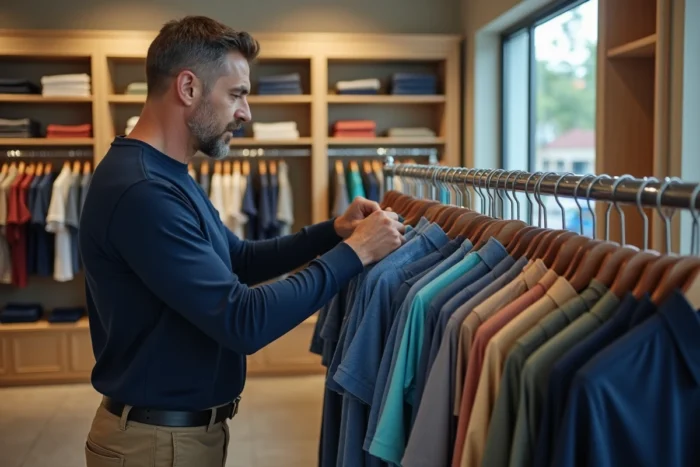
Dark shades (black, navy blue, dark green, brown) absorb a very large portion of UV rays. Black remains the most effective on this raw criterion. Navy blues and dark greens closely follow, with slightly lower filtration.
The downside is well-known: these colors also absorb infrared radiation, which increases the perceived temperature under the garment. In full sun and without wind, the comfort difference between a black t-shirt and a white t-shirt is clear.
Wearing dark remains relevant in three specific cases:
- Activity at altitude or at sea, where the wind compensates for the absorbed heat and where the UV index rises quickly
- Short exposure (urban travel, shaded terrace) where thermal comfort is not the limiting factor
- Technical garment with integrated ventilation (mesh back, laser cuts), which dissipates heat despite the dark hue
Outside of these situations, a classic dark garment without UPF treatment remains a compromise: good UV filtration, but quick overheating.
Anti-UV Clothing in Light Colors: The True Lever of Style and Safety
A fabric certified UPF 30+ in white or beige protects better than untreated black cotton. This is the point that most consumer guides do not exploit enough. The summer collections from outdoor and urban brands now offer light pieces (off-white, sand, pastels) with UPF 50+ ratings.
The gain is twofold. The thermal comfort remains that of a light garment (reflecting a large part of the visible and infrared spectrum), while UV protection relies on the technical fabric and not on the color.
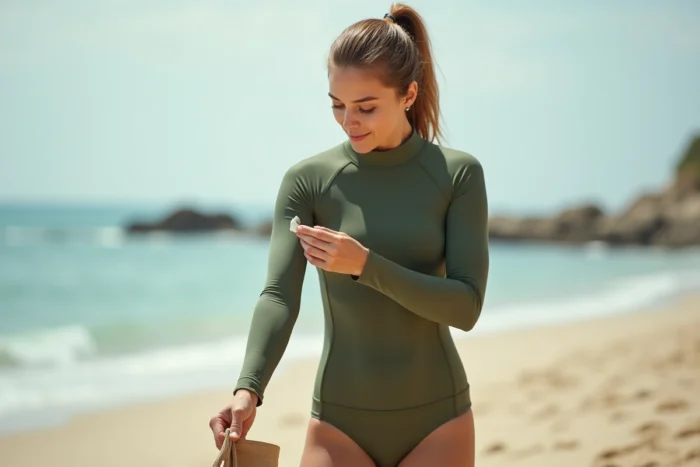
We observe that the 2025-2026 collections multiply these pieces in cuts designed for everyday wear, not just for hiking or surfing. Oversized shirts in technical UPF 50 linen, certified breathable knit polos, wide pants made from recycled synthetic fibers: the “stylish anti-UV” range is expanding beyond sportswear.
To stay stylish without sacrificing safety, the reflex to acquire is to check the UPF label before choosing the color. A UPF 50+ beige is better than a UPF 10 black.
Hats, Accessories, and Sunscreen: Completing Protection with Color
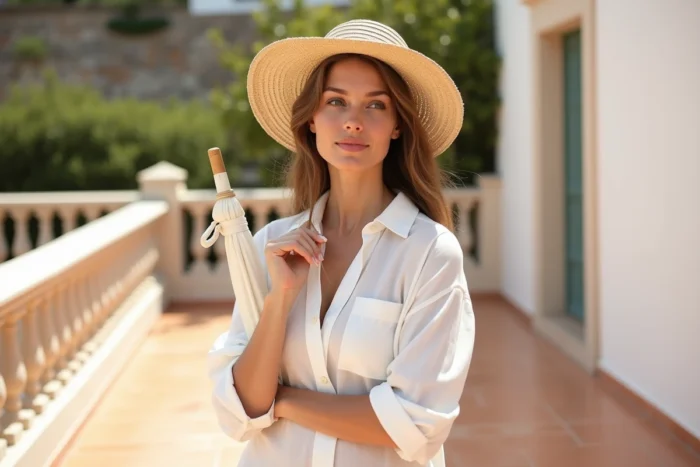
The garment does not cover everything. Face, neck, hands, and feet remain exposed. Wide-brimmed hats made of dark fabric offer better UV filtration than their untreated light straw counterparts. A wide-brimmed black hat effectively protects the face and neck.
For textile accessories (scarves, sleeves, neck gaiters), the same logic applies: dense, treated UPF fabric takes precedence over color alone. Anti-UV sleeves made of polyamide, often available in various colors, filter uniformly regardless of the chosen tone.
Sunscreen remains essential on uncovered areas. The choice of SPF depends on the phototype and the intensity of exposure. Light phototypes (I and II) require a high SPF even under a garment with moderate UPF, as ground reflection (sand, water, light concrete) reaches the skin from below.
- Phototypes I-II: SPF 50+ on all uncovered areas, reapply every two hours
- Phototypes III-IV: minimum SPF 30, with special attention to shoulders and neckline
- Children: prioritize UPF 50+ covering garments (long sleeves, hat), with sunscreen as a complement on the face and hands
Summary of Choice Criteria: Color, Fabric, and Use
The best choice combines a fabric certified UPF 30+ or 50+ with the color that suits your style and activity. For a day in the city, a light UPF 50 garment remains more comfortable and just as protective as a classic black one. For an outing at sea or in the mountains, ventilated dark technical clothing retains its relevance.
The common mistake is to choose color for protection and fabric for comfort, whereas it is the opposite that works. The fabric provides protection, the color provides style and thermal comfort. Starting from this principle simplifies every summer purchase and avoids unnecessary compromises between safety and appearance.