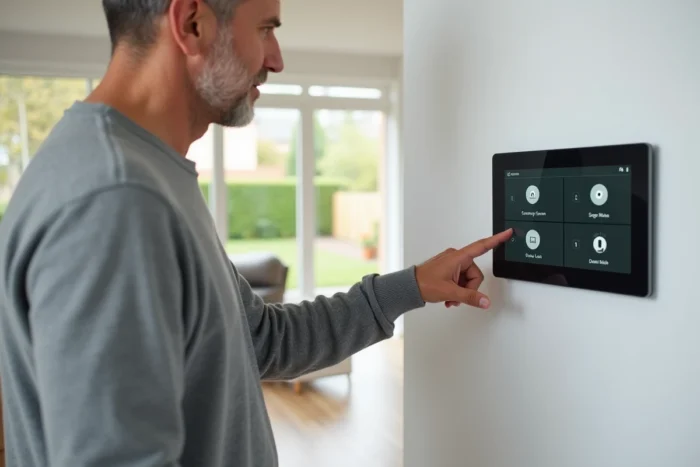
Your front door locks itself when you leave for work. A camera sends you a photo on your phone because movement has been detected in the garden. Your alarm continues to function even if someone tries to jam the Wi-Fi signal. This is no longer science fiction; it’s what home automation applied to security allows today in an equipped house.
Signal jammers and drones: the threats your alarm must know how to counter
Before choosing equipment, it’s essential to understand what you’re protecting against. Burglary techniques are evolving, and some render systems relying on a single communication channel obsolete.
Recent reports indicate that burglars are using signal jammers to neutralize radio or Wi-Fi alarms. The principle is simple: a small device emits a signal that disrupts the frequency used by your sensors. As a result, the alarm does not trigger, and the camera transmits nothing.
Others use drones to locate cameras, identify blind spots, and observe occupancy routines before taking action. This forces a rethink of sensor placement, including on the outer perimeter of the property.
Systems designed to withstand these threats combine multiple communication channels. For example, an alarm that uses both Wi-Fi, cellular networks, and a wired connection. If one channel fails, another takes over. Some models also integrate self-monitoring of connections: the system detects that a signal is being jammed and triggers a specific alert. Specialized installers like Home Dome offer configurations tailored to these technical constraints for individuals.
Connected alarm and sensors: the foundation of a secure home through home automation
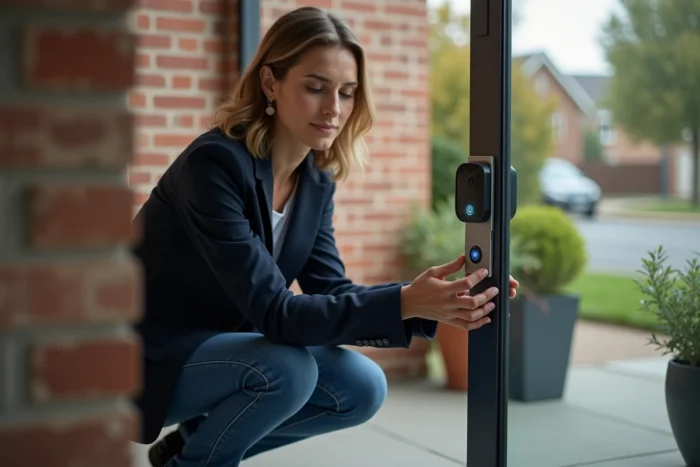
You may have noticed that current alarm systems no longer just sound an alert? A connected alarm integrates several types of smart sensors: opening detectors on doors and windows, motion detectors in rooms, smoke detectors, or water leak detectors.
Each sensor communicates with a central home automation hub. When an abnormal event is detected, you receive a notification on your phone within seconds. You can then check the situation remotely, trigger the siren, or alert emergency services.
What distinguishes a good system from a gadget
The difference lies in three concrete points:
- Redundancy of communications: a reliable system never relies solely on Wi-Fi. It combines at least two channels (cellular and radio, for example) to ensure transmission even in the event of an internet outage.
- Compatibility between devices: your cameras, locks, and detectors must be able to communicate via the same protocol or hub. Without this, you manage three separate applications, complicating responsiveness.
- Autonomy in case of power failure: the sensors and the hub must have backup batteries capable of lasting several hours without mains power.
A system that ticks these three boxes offers real protection. A system that only ticks one remains vulnerable to common scenarios.
Presence simulation and automation: securing without thinking
Home automation is not limited to detecting an intrusion. It can also prevent it. Presence simulation is the most telling example.
Specifically, your shutters open and close at variable times. Lights turn on in different rooms in the evening. A connected speaker can even play sounds of conversation. From the outside, the house appears occupied, even during your vacation.
Automation reduces the risk of human forgetfulness. You don’t need to remember to close the shutters or activate the alarm. Programmed scenarios take care of this: when you leave the house (detected by your phone’s geolocation), the system locks the access points, activates the sensors, and initiates away mode.
Access control: who enters and when
Connected locks allow you to know precisely who opened the door and at what time. You can assign temporary codes to a tradesperson or delivery person and then automatically deactivate them after use. This traceability effectively replaces the spare key slipped under the doormat.

RED Directive and cybersecurity: what regulations impose on your equipment
Adding connected devices at home also opens digital doors. An unsecured thermostat or an outdated camera can become an entry point for a hacker.
The European Radio Equipment Directive (RED), applied in France since 2022, now imposes cybersecurity requirements on domestic communication devices. Manufacturers must integrate protections against unauthorized access, encryption of transmitted data, and the ability for security updates.
Why does this matter to you? Because a device compliant with the RED directive has been designed to withstand common network attacks. A non-compliant device, often sold at low prices on import platforms, guarantees nothing.
Three reflexes to adopt for home cybersecurity
- Check that each connected device bears the CE marking and mentions RED compliance in its documentation.
- Change the default passwords of all devices upon installation, including the home automation hub and the Wi-Fi router.
- Keep firmware updated: manufacturers regularly release patches that fix vulnerabilities discovered after sale.
The security of a connected home relies as much on the quality of the IT network as on that of the physical locks. Neglecting either one is like leaving a window open while reinforcing the door.
Choosing home automation equipment to protect your house requires looking beyond the advertised features. Resistance to jamming, redundancy of communications, regulatory compliance, and diligence in software updates make the difference between a system that reassures and one that truly protects.