Many families live far from their elders, sometimes hundreds of kilometers away. Others simply no longer have living grandparents. Children then grow up without this figure who tells stories, transmits knowledge, and takes the time. Creating an intergenerational bond outside the biological family circle is possible, provided you know where to look and how to go about it.
Intermediary Associations: The Foundation of a Lasting Link Between Families and Seniors
Posting an ad on a social network or calling for volunteers in the neighborhood may seem like the quickest way. The result is often disappointing: few responses, poorly targeted profiles, no framework to secure the relationship.
Specialized associations structure the connection between families and willing seniors. Manou Partages, for example, has been operating since 2013 in Loire-Atlantique and has expanded to Pays de la Loire. Its model is based on a preliminary interview with each family and each senior, followed by a proposal for pairing based on geographical proximity, interests, and availability.
The Swiss network Grands-Parents de Cœur operates on a similar principle, with regular support after the connection is made. These organizations do not simply provide a contact list. They verify motivations, establish a framework (frequency of meetings, types of activities), and remain available if adjustments are needed.
For families looking to find grandparents of the heart outside their region, these associative networks represent the most reliable solution because they filter applications and support the relationship over time.
Intergenerational Cohabitation: A Bond Built Daily
Have you heard of shared housing between a senior and a young person? The principle is simple: an elderly person offers part of their home in exchange for a caring presence and small services. The young person does not replace a home helper. They share meals, report an open window, and check in.
The Cohabilis network, mentioned by the public service, facilitates these connections. Social landlords and local information points dedicated to the elderly can also guide families towards this type of arrangement.
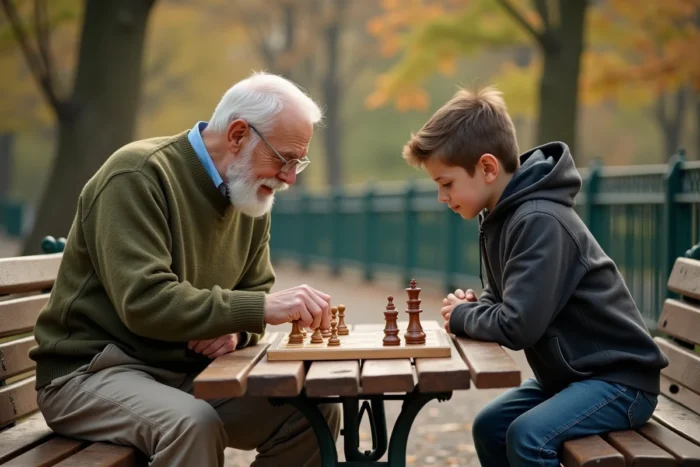
This format is not suitable for all situations. It is more aimed at young adults (students, young professionals) than families with young children. But it illustrates a often overlooked point: the strongest intergenerational bond is born from regularity, not from occasional events. Sharing a coffee every morning creates more intimacy than a monthly workshop.
Concrete Criteria for Choosing the Right Intergenerational Meeting Framework
Not all options are equal. Before committing, a few points deserve to be checked to avoid disappointment on both sides.
- Does the association or structure offer a one-on-one interview before the connection? Without this step, the risk of misalignment between the senior’s expectations and the family’s needs increases significantly.
- Is there a follow-up planned after the meeting? The first weeks are crucial. A contact person available to adjust the pace or resolve a misunderstanding can change the course of the relationship.
- Does the framework clearly distinguish the emotional bond from the service? A grandparent of the heart is neither a babysitter nor a caregiver. Setting this boundary from the start protects both parties.
- Is the geographical proximity realistic? A journey of more than twenty minutes reduces the frequency of visits, and frequency is the engine of the bond.
These criteria may seem simple. In practice, many families discover them after an initial failure, when the senior contacted through a small ad becomes disenchanted after a few weeks due to lack of structure.
Intergenerational Commitments Beyond the Grandparents of the Heart Model
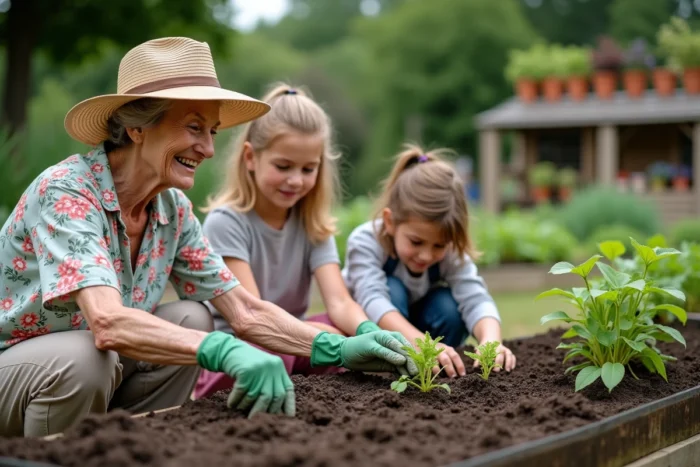
Field feedback shows a diversification of formats. Intergenerational initiatives are no longer limited to the senior-family duo. Collective workshops, shared gardens, and neighborhood projects mix several generations without requiring as personal a commitment as that of a grandparent of the heart.
Local authorities are now linking these initiatives to broader policies of preventing loss of autonomy and aging well. The idea is that regular social connections help maintain the cognitive and physical abilities of seniors while providing children with a stable emotional reference.
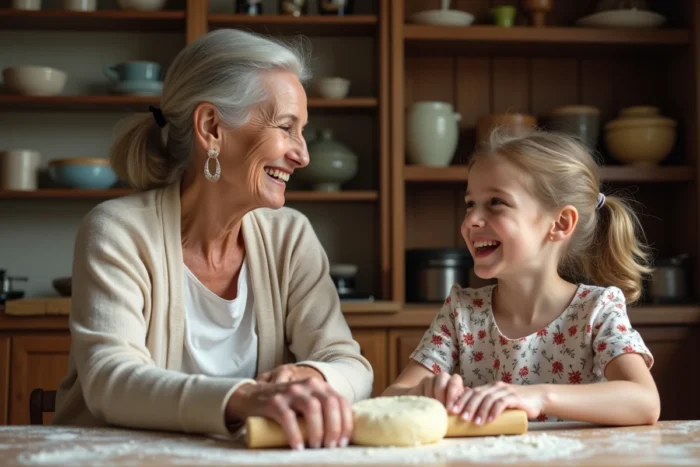
Why explore these alternative formats? Because some seniors do not wish to take on a family role but are happy to share a skill (sewing, gardening, cooking) in a collective setting. For a child, an older adult who teaches them to repot a plant every Wednesday can become an attachment figure as significant as a designated grandparent.
How to Spot These Local Initiatives
Community social action centers (CCAS) and neighborhood houses are the first points of contact. Town halls regularly publish calls for participation in intergenerational projects in their municipal bulletins or on their online pages.
The local information points dedicated to the elderly also direct towards suitable structures. Often, a simple phone call is enough to obtain a list of active initiatives in one’s municipality.
The bond between a child and an elder who is not their biological family is built like any human bond: through repeated presence, shared simple activities, and a framework that respects each other’s boundaries. Families that go through an intermediary structure save time and reduce the risk of disillusionment. Those who prefer a collective framework find a less demanding entry point that is equally enriching.