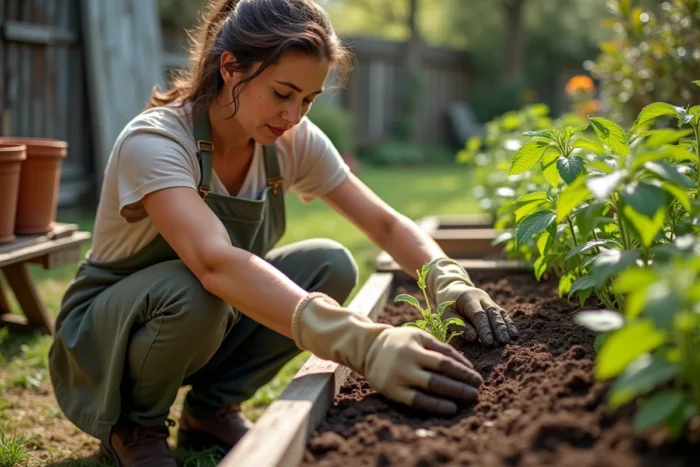
The neatly trimmed flower beds and meticulously measured plantings are losing ground. What is rising in French gardens are wildflower meadows, dense plantings of perennials, and modular raised vegetable beds. Following gardening trends allows one to adapt practices to real constraints: drought, depleted soil, and limited space on a balcony.
Naturalistic plantings in matrix: the method that replaces weeding
Have you noticed those flower beds where grasses and perennials seem to grow in disorder, yet without any visible weeds? It’s not by chance. This is called matrix planting, a technique that is gaining traction in international exhibition gardens and is starting to be adopted by homeowners.
The principle is simple: mix perennials and grasses of comparable height, planted very closely together. This density suppresses weeds without resorting to plastic mulching or chemical weeding. The soil remains covered at all times, evaporation decreases, and so does the need for watering.
In practice, one might combine echinaceas, yarrow, and stipas in the same square meter. The roots occupy all the available space. Once established, this type of bed requires very little maintenance in the second year.
During the RHS Chelsea Flower Show 2026, this approach was identified as the most consistent trend among the gardens presented. Landscape designers see it as a fundamental shift, not just a passing fad. For gardeners who regularly follow the news on the Le Jardineur site, this naturalistic turn is not a surprise: field reports confirm that the matrix lives up to its promises in the face of hot summers.
Synthetic grass and perfect lawns: why garden centers are abandoning them
Major French garden center chains are reporting a sharp decline in synthetic grass sales. Mon Jardin & Ma Maison now classifies perfect lawns and synthetic grass among the ideas “to urgently forget in 2026.”
This decline is not aesthetic. Synthetic grass accumulates heat in the summer, does not filter rainwater, and ends up as plastic waste after a few years. Gardeners are turning away from it in favor of rustic meadows and flowering mixes that welcome pollinators.
Replacing a short lawn with a mix of clover, birdsfoot trefoil, and yarrow reduces mowing frequency to two or three times per season. The soil remains cooler, more alive, and the garden gains a rustic look that many seek in the face of repeated heatwaves.
Container and raised bed gardening: much more than a balcony solution
Container gardening is no longer just for city dwellers without land. Specialized media describe a growing popularity of “container gardening” as a structuring practice in traditional gardens, not just on balconies.
Modular raised beds to adapt the garden to the weather
A wheeled planter can be moved into the shade when a heatwave strikes. It can be brought closer to the south wall in autumn to extend the tomato harvest. This modularity addresses a concrete problem: episodes of extreme heat are becoming unpredictable.
For a raised vegetable bed, prioritize a substrate rich in homemade compost and a container at least forty centimeters deep. Fruit-bearing vegetables like tomatoes or peppers need this root volume to produce properly.
Plants suited for containers
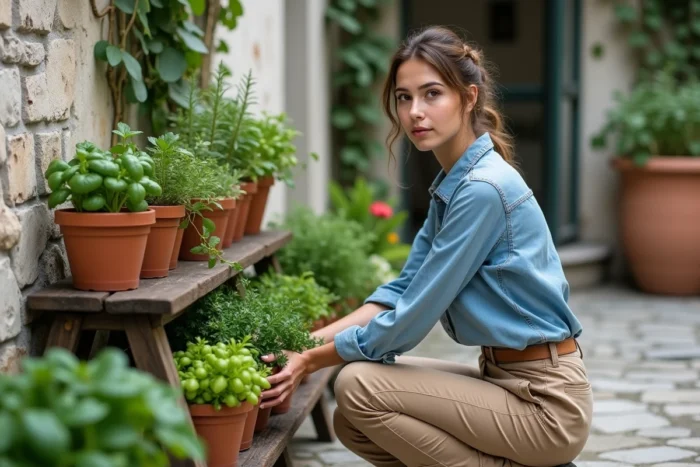
- Mediterranean herbs (thyme, rosemary, sage) tolerate heat well and the reduced volume of a pot, provided there is proper drainage.
- Ever-bearing strawberries produce from June to October in a balcony planter, without taking up ground space.
- Ornamental grasses like small miscanthus add movement and filter wind on an exposed terrace.
Organic amendments and cover crops: nourishing the soil rather than the plant
Interest in organic soil amendments and cover crops has seen a significant increase in recent months. Gardeners are looking to regenerate their soil rather than compensate for its deficiencies with synthetic fertilizers.
A cover crop is a temporary planting (phacelia, mustard, crimson clover) that is established between two crops. Its roots loosen the soil, fix atmospheric nitrogen for legumes, and protect the surface from erosion. At the time of the next planting, it is mowed and incorporated into the surface.
How to choose your cover crop according to the season
- At the end of summer after harvesting summer vegetables, white mustard grows quickly and covers the soil before winter.
- In autumn, forage rye withstands the cold and maintains a green cover until spring.
- In spring, phacelia attracts pollinators while structuring the soil in plots awaiting transplanting.
The idea is not to replace compost but to complement it. A living soil, populated with worms and mycorrhizal fungi, retains water better and nourishes plants without external inputs. This is the foundation of ecological gardening that is becoming standard practice.
Adopting these practices does not require overhauling an entire garden. A first matrix of perennials on the terrace, a square of clover instead of mowed grass, a sowing of mustard after tomatoes: every action counts. The gardening that works in 2026 is the one that works with the soil and climate, not against them.