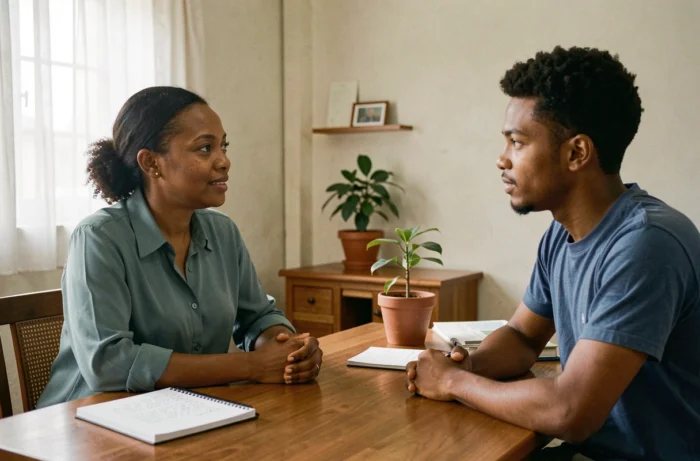
In Ambovombe, in the south of Madagascar, a psychologist from the WHO sees young people in psychotic crisis related to cannabis use or postpartum depression. Consultations take place in a regional hospital that covers a vast area, without local support. This on-the-ground reality illustrates the gap between the mental health needs of the Malagasy population and the resources available to address them.
Psychological Distress of Adolescents in Madagascar: A Blind Spot in the Healthcare System
The Malagasy press has begun to document a long-ignored phenomenon: the psychological distress of adolescents remains largely invisible to families and schools. The country lacks regular data to measure its extent.
This refers to chronic anxiety, depressive disorders, and risky behaviors that do not trigger any alerts because they do not correspond to local representations of mental illness. Adolescents do not seek help, and their relatives do not identify the signals.
This observation opens up a concrete field of intervention for psychologists: early detection in schools, suicide prevention, support groups in high schools. Professionals listed on mg-psy.org are already involved in this type of initiative, in connection with local educational structures.
The work is not limited to individual consultations. It involves training teachers to detect unusual behaviors and then directing them to appropriate psychological support. Without this link, disorders worsen until they reach an acute crisis, which eventually ends up in psychiatric emergencies.
Psychiatry and Psychology in Madagascar: Two Professions, One Field
Madagascar has a handful of hospital centers capable of addressing mental disorders, most of which are concentrated in the capital. The rest of the territory operates with very limited resources.
Psychiatrist Nambinina Rasolofotsialonina, who practiced in Normandy before returning to Madagascar, describes a considerable gap between the care available locally and that practiced in France. Full hospitalizations are only possible in a few facilities.
In this context, the psychologist becomes the first accessible resource for a large part of the population. While the psychiatrist prescribes medication and manages acute crises, the psychologist ensures long-term follow-up: regular interviews, family support, and work on trauma related to humanitarian crises.
Feedback varies on this point, but the complementarity between the two professions seems to work better when it is organized in advance, with clear referral protocols between the local psychologist and the reference hospital center.
Climate Crises and Mental Health in Southern Madagascar
In Ambovombe, WHO professionals observe that mental disorders are increasing in direct relation to living conditions. Prolonged droughts, recurring cyclones, structural underdevelopment: these factors create a chronic anxiety linked to humanitarian crises that affects men and women differently.
Among young men, cannabis use exacerbates pre-existing vulnerabilities and triggers psychotic episodes. Among young women aged 13 to 18, romantic separations and postpartum depression are the most common triggers.
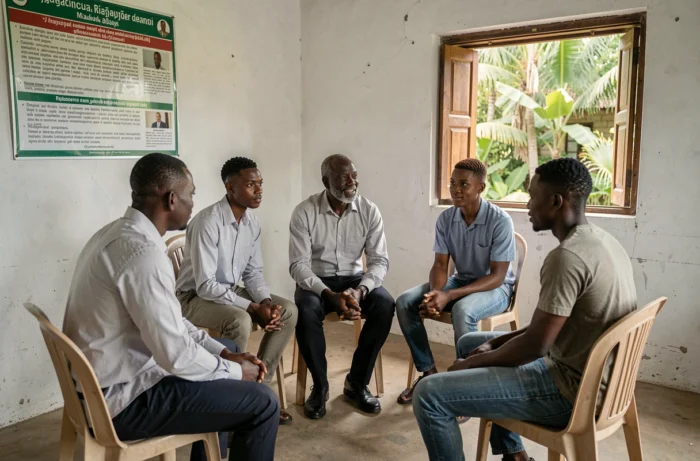
The role of the psychologist here goes beyond the office. It involves community work:
- Interventions in villages after a cyclone to identify individuals in shock or acute distress
- Support groups for mothers facing food insecurity, where the psychological dimension intertwines with material problems
- Training community health workers to identify signs of mental disorders, to address the lack of psychologists on the ground
This approach aligns with the WHO’s regional strategy for Africa, which promotes integrating mental health into primary healthcare at the community level. The idea is to reach populations through local care platforms rather than waiting for them to travel to a hospital several hours away.
Stigmatization of Mental Disorders: What Psychologists Are Changing on the Ground
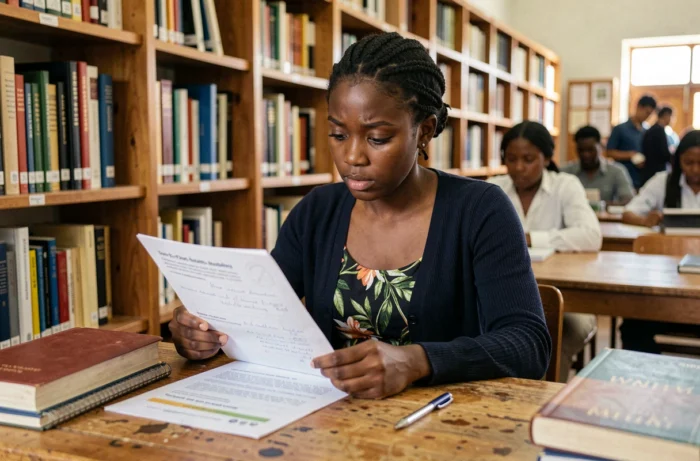
Mental disorders are still surrounded by many misconceptions in Madagascar. Some individuals in crisis are still considered victims of witchcraft, which delays or prevents treatment.
The work of destigmatization does not come from abstract campaigns. It comes from the regular presence of a psychologist in a neighborhood, a clinic, a school. When residents see a professional receiving patients and those patients improving, perceptions gradually change.
The National Order of Psychologists of Madagascar plays a role in structuring the profession. Its existence allows for distinguishing trained practitioners from those who claim to be psychologists without a diploma, a real problem in a country where regulation is still being developed.
- The clinical psychologist provides individual consultations and therapeutic follow-up
- The occupational psychologist works in companies on psychosocial risks and professional support
- The school psychologist focuses on student development and identifying learning difficulties related to emotional disorders
Each specialty meets a specific need. Psychological consultation is not a luxury but a public health tool, all the more necessary in a context where psychiatrists are too few to cover the territory.
The first national psychology congress, organized in Madagascar, marked a milestone in the institutional recognition of the discipline. There is still a long way to go: training more psychologists, deploying them outside the capital, and funding positions in primary care structures. It is under these conditions that mental well-being will cease to be a secondary issue in the Malagasy healthcare system.